
Chemical conversion treatment: A protective film is formed on the surface of magnesium alloy through chemical reactions to enhance its corrosion resistance. Common processes include chromate conversion treatment and chromium free chemical conversion treatment. Chromate conversion treatment will form a dense oxide film, but it contains toxic substances; The chromium free chemical conversion treatment uses environmentally friendly conversion agents such as phosphates, molybdates, etc. to form a protective layer, which is environmentally friendly and has good effects.
Anodizing treatment: In an electrolyte solution, magnesium alloy is electrolyzed as an anode to form a layer of oxide film on its surface. This oxide film not only has high hardness, but also effectively prevents contact between corrosive media and the substrate.
Micro arc oxidation treatment: Using a high-voltage electric field to generate micro arc discharge on the surface of magnesium alloy, forming a ceramic oxide film. This oxide film has excellent corrosion resistance, wear resistance, and thermal shock resistance, and is tightly bonded to the substrate without easy detachment.
Composite oxidation technology: This is a surface treatment method that combines chemical conversion, anodizing, micro arc oxidation and other technologies, which can generate a uniform and delicate film layer on the metal surface, providing excellent corrosion resistance and wear resistance.
Advantages, disadvantages, and application scenarios of each method
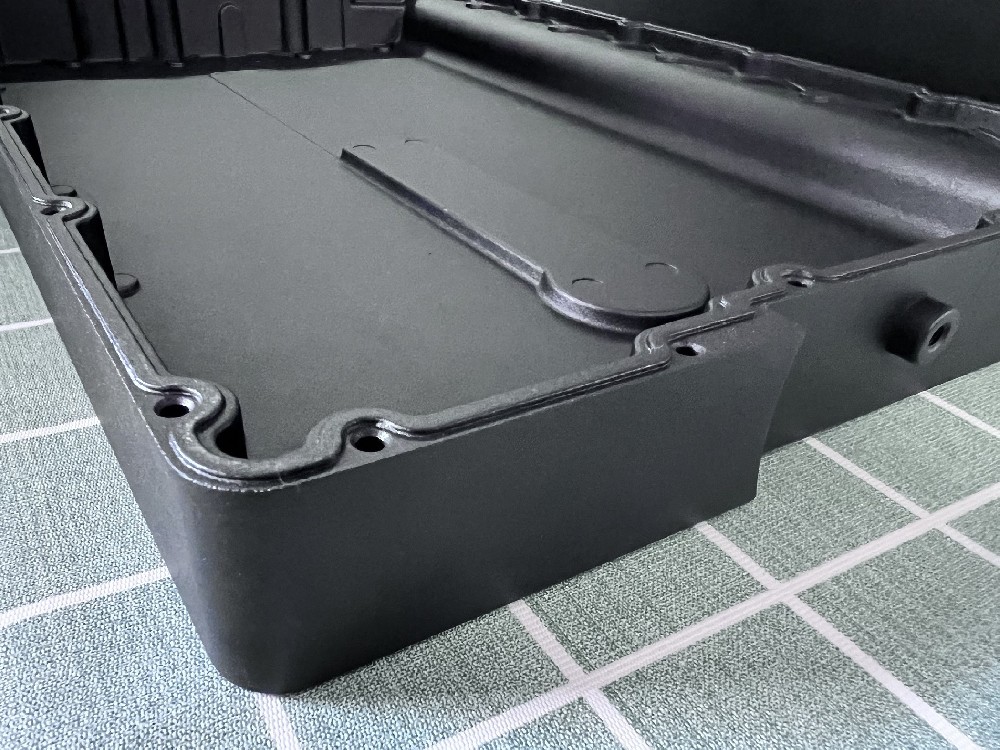
Chemical conversion treatment: The advantages are simple operation and significant effects; The disadvantage is that some processes contain toxic substances, which pose certain risks to the environment and human health. Suitable for occasions with high requirements for corrosion resistance.
Anodizing treatment: The advantage is that the generated oxide film has high hardness and strong corrosion resistance; The disadvantage is that the electrolysis conditions need to be controlled during the processing to avoid excessive thickness or unevenness of the film layer. Suitable for applications that require high hardness and high corrosion resistance.
Micro arc oxidation treatment: The advantage is that the formed oxide film has excellent performance, is environmentally friendly and non-toxic; The disadvantage is that the equipment cost is relatively high, making it suitable for large-scale production. Suitable for various magnesium alloy materials, especially for use in harsh environments.
Composite oxidation technology: The advantage is that it combines the advantages of multiple treatment methods and has a comprehensive effect; The disadvantage is that the technology is complex and the cost is high. Suitable for applications with extremely high performance requirements, such as aerospace, automotive manufacturing, etc.
By selecting and applying the above methods, the anti-corrosion performance and overall performance of magnesium alloys can be effectively improved, meeting the needs of different fields.