
Abstract
The semi-solid injection molding technology for magnesium alloys is a new processing technology that has been widely used in the automotive, 5G, 3C, and military industries, with promising application prospects. This paper introduces the principles and equipment of semi-solid magnesium alloy injection molding, compares its advantages with die-casting, describes the production of magnesium alloy raw materials (billets), and lists application cases of magnesium alloy parts such as laptop components (A-side shell, D-side bottom case, C-side keyboard panel), automotive parts (electronic controller housings, navigation system monitor frames, LCD monitor housings), and other parts (bicycle forks, drone battery housings). It also details the mold requirements and post-processing methods for magnesium alloy parts after demolding, showcasing the role of semi-solid magnesium alloy injection molding technology in lightweight construction.
**Keywords: Magnesium Alloy, Semi-Solid Injection, Application Cases, Product Processing, Lightweight**
1. Introduction to Semi-Solid Magnesium Alloy Injection Molding
**1.1 Principles of Semi-Solid Injection Molding**
The phenomenon of semi-solid metals was discovered by Professor Flemings at MIT in 1971. The development of semi-solid injection molding technology for magnesium alloys has been around for 30 years, with mature equipment manufacturing for 20 years. This technology has attracted widespread attention due to its high efficiency, energy-saving capabilities, near-net shape production, and high performance of molded parts. In the Chinese market, only JSW from Japan offers semi-solid magnesium alloy injection molding machines. Recently, domestic manufacturers have successfully developed and marketed their equipment. The principle of semi-solid injection molding is similar to that of injection molding. Magnesium alloy ingots are first processed into fine particles, which are transported to the barrel under negative pressure and gravity. In the barrel, the alloy particles are moved towards the mold by a rotating screw under heat, reaching a suitable molten or semi-solid state for injection. The semi-solid slurry is then injected into the mold cavity at high speed, forming the part.
**1.2 Advantages of Semi-Solid Magnesium Alloy Injection Molding**
Compared with traditional die-casting, semi-solid magnesium alloy injection molding offers advantages such as safety, environmental friendliness, precision, cost savings, high production efficiency, density, stability, simplicity, and intelligence. For example, it avoids high-temperature melting and metal transfer, reducing workplace accidents, and lowers energy consumption by 60%. Mold life is extended by 2-4 times, and residual material can be reused.
**1.3 Materials for Semi-Solid Magnesium Alloy Injection Molding**
The most commonly used magnesium alloy material is AZ91D, which has a high strength-to-weight ratio and improved corrosion resistance compared to pure magnesium. The raw materials for semi-solid injection molding are 3-5mm magnesium alloy chips, produced by processing AZ91D magnesium alloy ingots into chips. Various methods, such as electromagnetic stirring, are used to prepare semi-solid alloy slurries, which are then rapidly solidified and cast into billets.
2. Application Cases of Magnesium Alloy Parts
**2.1 Injection Molding of Laptop Components**
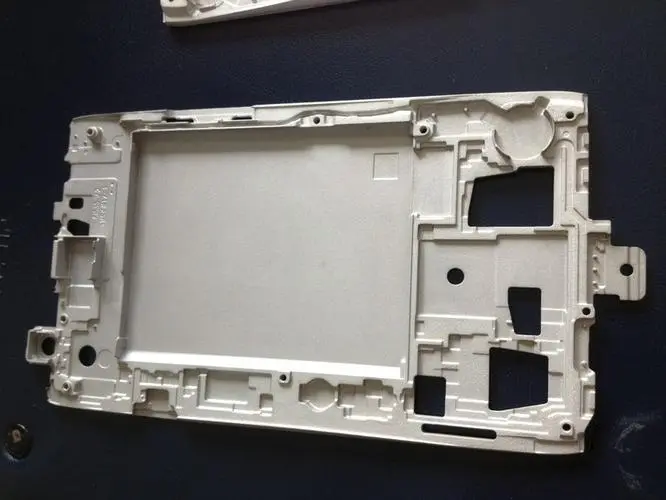
In laptop components, semi-solid magnesium alloy injection molding is used for A/D sides (magnesium-lithium alloy) and C side (keyboard panel made of magnesium-aluminum alloy). The mold structure is similar to that of traditional hot chamber die-casting molds but with lower injection force. The D-side bottom case has a simple structure, while the C-side keyboard panel is more complex, requiring careful control to avoid weld lines, making the injection molding process more challenging.
**2.2 Injection Molding of Automotive Parts**
Magnesium alloys are used in automotive parts such as housings (e.g., air conditioning housings, transmission cases) and brackets (e.g., mirror brackets, seat frames). Lightweighting in automotive design is crucial for improving fuel efficiency and reducing CO2 emissions. Although Chinese automakers have started using magnesium alloys, they still lag behind Western countries. The potential for magnesium alloy applications in the automotive industry is significant.
**2.3 Injection Molding of Other Parts**
Magnesium alloys are also used in other lightweight parts, such as bicycle forks and drone battery housings. For instance, the magnesium alloy bicycle fork weighs only 1kg and requires high density and airtightness. Drone battery housings are lightweight and provide shielding, with specific dimensions and cycle times for production.
**2.4 Post-Processing of Magnesium Alloy Injection Molded Parts**
After demolding, semi-solid magnesium alloy injection molded parts require post-processing, such as deburring and inspection, followed by machining (usually CNC) to meet assembly requirements. Surface treatments like anodizing, electrophoresis, micro-arc oxidation (MAO), powder coating, PVD vacuum coating, sandblasting, nano-coating, and surface brushing are applied based on part requirements to enhance surface quality, corrosion resistance, wear resistance, and appearance.
3. Conclusion
Semi-solid magnesium alloy injection molding is a new processing technology similar to plastic injection molding, considered one of the most promising manufacturing processes of the 21st century. It has significant advantages and broad application prospects in producing lightweight parts for laptops, aerospace, military, high-speed rail, 5G, drones, automotive, medical, and outdoor fitness equipment. With advancements in domestic equipment development, costs are significantly reduced, and the technology is becoming more refined. China's rapid adoption of semi-solid magnesium alloy injection molding technology, along with developments in materials, equipment, molds, processes, and post-processing techniques, is expected to surpass Western countries in the future.